Intelligent Agents
- An agent ...
- Senses a problem (often requires intelligence)
- Generates a solution (always requires intelligence)
- Problem representation
- Search for a solution
- Knowledge for search guidance
- Actuates the solution (occasionally requires intelligence)
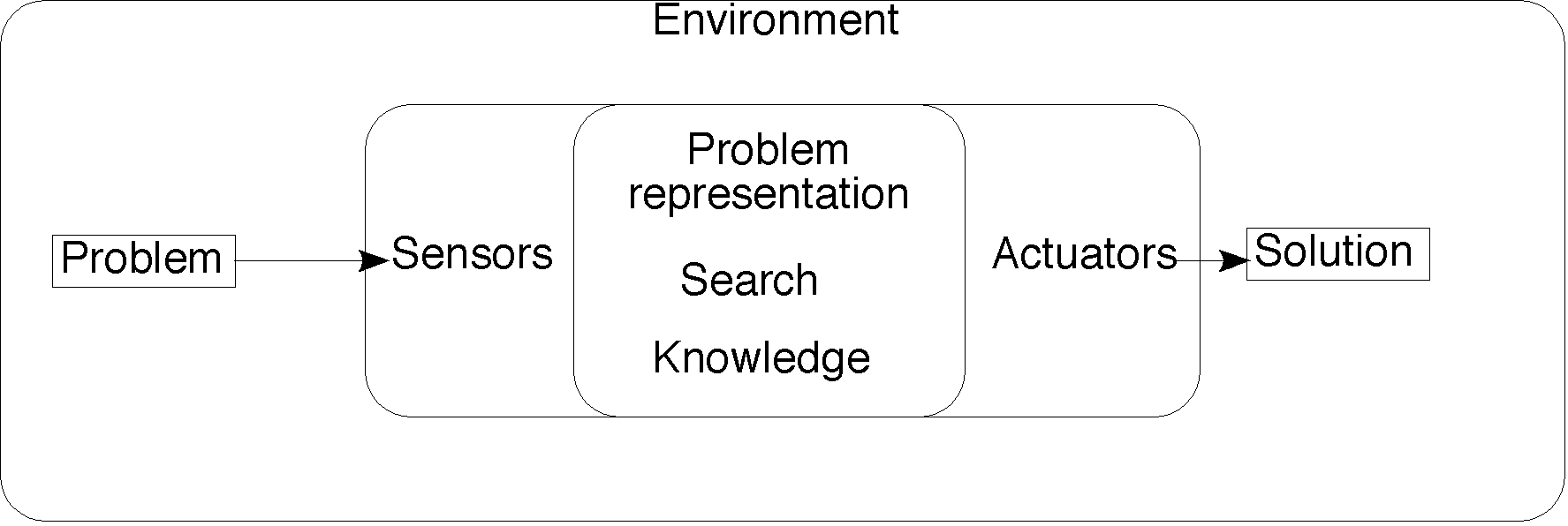
- The Environment
- An intelligent agent exists in an environment that contains problems that the agent
solves.
- The complexity of the environment may stimulate or require complex (intelligent) activity.
- Provides the meaning for all problem solving activity
- Is a source of knowledge that may be extracted by the sensors
R&N views
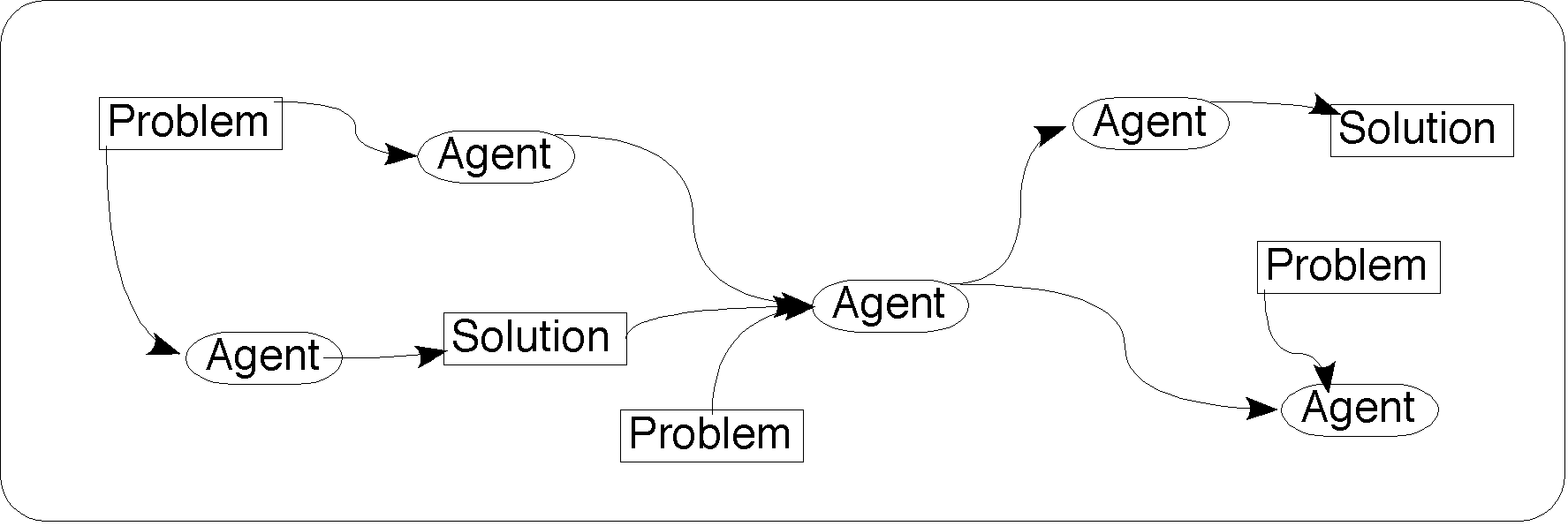
- Emergent intelligence: Societies of agents
- Colonies exhibit intelligence (brains, ants, bakers, stock market) with limited individual
agent intelligence
- Autonomous agents with specific capabilities
- Situated agents are aware of their part of the environment
- Communicative agents interact productively
- Structured societies are coordinated
- Societies are emergent - the whole is more intelligent than the sum of the parts.
- Need CS tools for these aspects
Interesting Questions
- What are the three components of a classic definition of a problem?
- Describe the operation of the Turing test as a criteria for success in artificial
intelligence.
- Draw a labelled diagram showing the components of an intelligent agent.
- What facet of Philosophy suggests that the mind operates according to physical laws?
What implications does this have for AI?
- Name three important contributions to AI from Mathematics.
- Describe how the rapid improvements in computer hardware have advanced the capabilities of AI
systems.
- Name and briefly (maximum 20 words each) describe N AI application areas.
- The Physical Symbol System hypothesis states that "A Physical Symbol System has the necessary
and sufficient means for general intelligent action."
What is the structure of a Physical Symbol System?
- In the context of physical symbol systems, what are meant by "designation" and
"interpretation"?
- Describe the five requirements of completeness and closure for a physical symbol system.